
Farming and gardening is a variable as the weather. It’s always common topic among farmers and gardeners though usually we hear about all the disasters and crop failures. Not to distract from the challenges we’ve probably all observed that some years certain crops do better than expected.
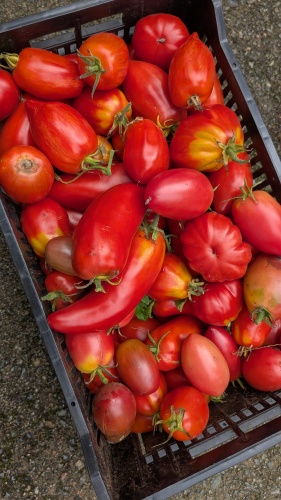 In our polyhouse this year it was tomatoes. More specifically, paste tomatoes. One variety, Carnello Paste, produced astonishingly large, vibrant, flavourful fruits. We put up more than 2 dozen jars of tomato sauce and tomato paste from four different varieties of tomatoes, as well as jars of canned tomatoes, tomato salsa, and hamburger relish.
We also had and impressive showing from a couple of varieties of salad tomatoes — Sunrise Bumble Bee and Atomic Grape.
They were more productive than we could imagine which lead to a lot of experimentation with new recipes. Towards the end of September they were still abundant so we resorted to canning and freezing. A nice taste treat for winter.
I asked Foodlands members and friends about what went well this season and received unlighting stories from Jordan Marr of Unearthed Organics, Ariella Falkoski from Rootdown Organic Farm, and Daria Zovi from The Quarry Collective. Thanks for sharing.
From Jordan Marr, Unearthed Organics
What went well at Unearthed Organics this year was some support from a colleague that led to the best crop of dry beans I’ve managed so far.
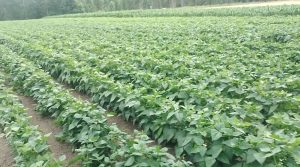 In my transition to small-scale organic dry bean production from organic mixed-veggies, my efforts to learn how to control weeds with mechanical cultivation have been adventurous. 2024 was no highlight; despite many hours in my field on my walk-behind cultivation tractor, my field was tangled mess by harvest time. Over the winter I reached out for advice to my friend Andrew Budgell at Laughing Crow Organics, who speculated that a tine weeder would make a big difference for my bush bean weed management. His help didn’t stop there; Budgie (nobody calls him Andrew!) lent me a tine weeder setup he had lying around so that I could try before buying. He even convinced his colleague Ryan at Thiessen Tillage to send me a couple extra parts that the setup was missing.
The tine weeder made a world of difference, and by the 2025 harvest my acre of beans was as close to spotless as this slipshod farmer is ever going to realize. Farmer-to-farmer empowerment for the win! Thanks Budgie.
Jordan Marr
From Ariela Falkowski, Rootdown Organic Farm
In 2026, with the help of Nikki from Stewardship Pemberton Society, I decided to grow a few seed crops as a side project at Rootdown Organic Farm, where I am farm manager, in Pemberton, BC. I have dabbled in seed growing for some years, and it keeps tugging at me because I know its importance. But the idea of adding another thing to the already busy days of running a mixed veggie farm just never seemed possible.
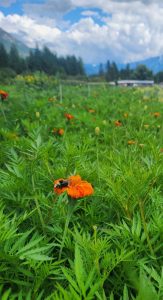 But then last winter two things happened: one, I took the Organic Vegetable Seed Production micro credential though VIU; and two, Nikki from Stewardship Pemberton announced the their new “seed grow out program” where they would partner with farms who had the space to grow out certain seed crops, and help with some of the labour involved in growing them – especially when it came to the seed harvest and cleaning stage.
And so after a brief meeting with Nikki, I incorporated 3 seed crops into the farm last year: an open pollinated heading broccoli called Solstice, Taj Mahal marigold, and tulsi basil.
And while this project at times got pushed to the bottom of the to-do list, or required time from me after hours to accomplish things that needed doing – it also went remarkably well. We harvested a decent seed crop off of all three crops – most especially the broccoli!
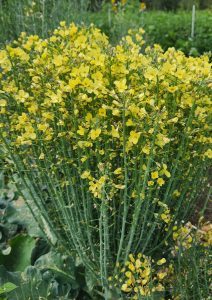 Another great benefit to these crops was the food and habitat they provided for pollinators throughout the season. Tulsi and marigolds are always bumping with pollinators when they are in bloom, but of course, broccoli normally gets harvested for its edible head and/or shoots before it goes to flower. So seeing the huge broccoli flowers in full bloom just buzzing with bees was a real treat.
While I am a long way from feeling like I can become a seed farmer of any note, I did learn a lot through this process, and appreciated taking one more step on my seed growing journey.
Cheers,
Ariella
From Daria Zovi, The Quarry Collective
Our most successful crop in 2025: Romano beans!
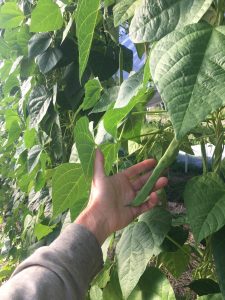 The original seeds came from a biodynamic farm in Pitt Meadows almost 10 years ago and we have been saving seeds from our plants ever since. I start the seed at our nursery and transplant in out caterpillar tunnel early, usually in the first or second week in April in a single row one foot apart. I train each plant on a single string off the frame of the tunnel and the vines climb to the top and back down creating a green wall in the middle of the tunnel. I introduce predatory mites twice in the season to help control two spotted spider mites. Occasionally I seed carrots on the same bed, one row on either side of the beans. In 2025 I harvested approx. 700 lbs of beans from an 80ft row from June to October, harvesting two-three times per week with a ladder. I mostly sell the crop to restaurants and wholesalers for $6-8/lb.
Take care, Daria


